
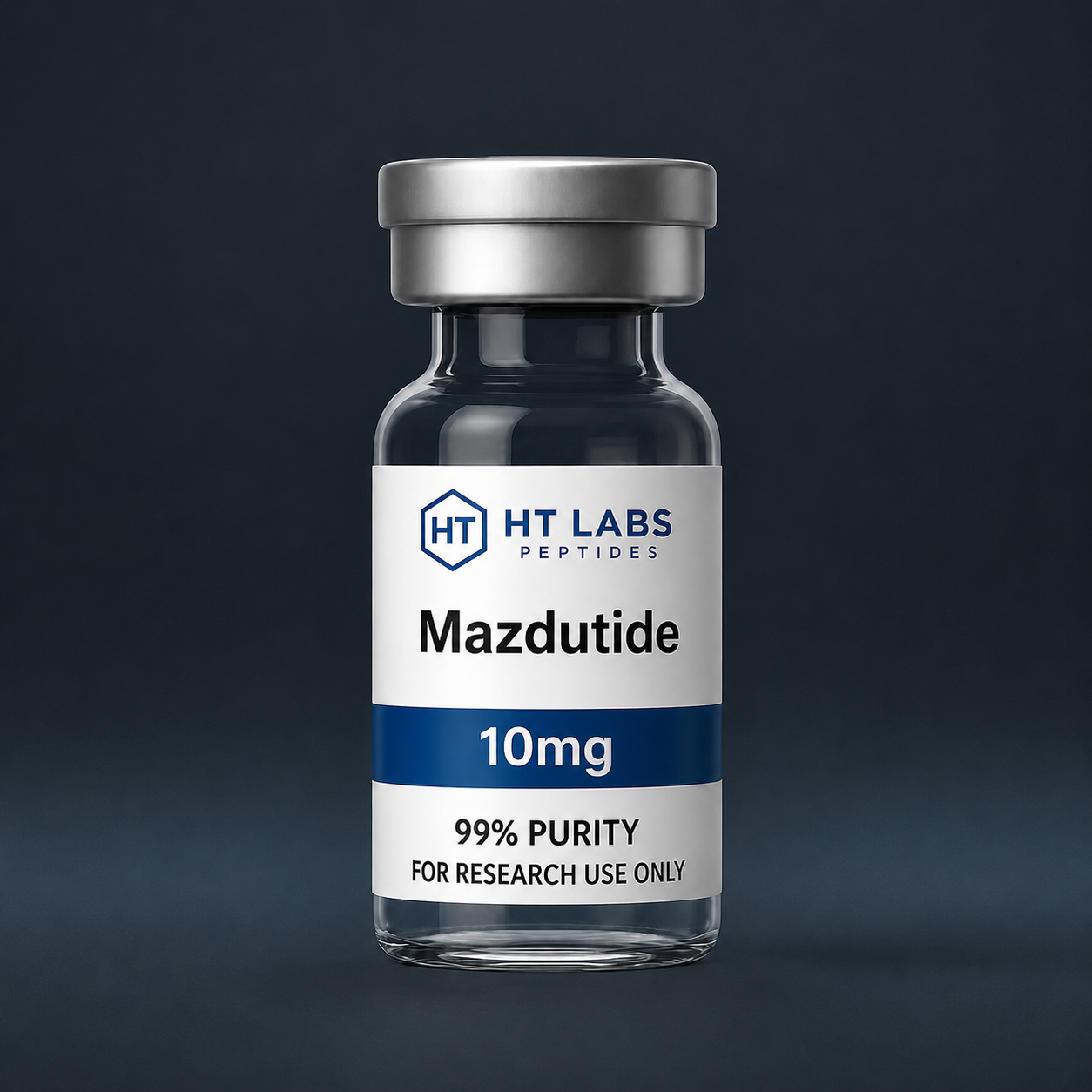
Description
Mazdutide: A Comprehensive Guide to the Dual GLP-1/Glucagon Receptor Agonist
Mazdutide, known alternatively as IBI-362 or LY-3305677, has emerged as a groundbreaking synthetic peptide analogue of the mammalian gut hormone oxyntomodulin . This innovative compound functions as a balanced dual agonist, targeting both the glucagon-like peptide-1 (GLP-1) receptor and the glucagon (GCG) receptor simultaneously . Therefore, it represents a significant advancement in incretin-based therapeutics for metabolic research.
The scientific community has directed substantial attention toward Mazdutide’s therapeutic potential, particularly for investigating obesity, type 2 diabetes, and related metabolic disorders . This comprehensive guide explores the chemical properties, biological activities, research applications, and handling protocols for this promising peptide. Whether you are an experienced researcher or new to peptide science, this resource will illuminate the multifaceted nature of Mazdutide and its applications in laboratory settings.
Chemical Identity and Structural Properties
Molecular Characteristics
Mazdutide is a synthetic linear peptide comprising 34 amino acids, with a molecular formula of C₂₁₀H₃₂₂N₄₆O₆₇ and a molecular weight of approximately 4563.06 g/mol . The CAS number for this compound is 2259884-03-0, which facilitates precise identification in research databases and procurement systems .
The peptide sequence is notably sophisticated: His-{Aib}-Gln-Gly-Thr-Phe-Thr-Ser-Asp-Tyr-Ser-Lys-Tyr-Leu-Asp-Glu-Lys-Lys-Ala-Lys-{AEEA-AEEA-γGlu-Eicosanedioic acid}-Glu-Phe-Val-Glu-Trp-Leu-Leu-Glu-Gly-Gly-Pro-Ser-Ser-Gly-NH₂ . Importantly, the structure incorporates a non-coded amino acid residue, α-aminoisobutyric acid (Aib), at position 2, which enhances the peptide’s stability and resistance to enzymatic degradation .
Fatty Acid Conjugation and Half-Life Extension
One of the most distinctive features of Mazdutide is its conjugation to a C20 fatty diacid moiety through a hydrophilic linker at the lysine residue at position 20 . This fatty-acyl modification serves a critical purpose: the compound binds extensively to albumin in plasma, thereby prolonging its half-life significantly . Consequently, this design enables once-weekly administration in research protocols, which represents a substantial improvement over peptides requiring more frequent dosing .
Solubility Profile
Understanding the solubility characteristics of Mazdutide is essential for successful experimental design. This peptide demonstrates good solubility in water, achieving concentrations of up to 22.22 mg/mL when ultrasonication and pH adjustment to 2 with HCl are employed . Additionally, it is soluble in DMSO at 1 mg/mL . Researchers should note that solubility may vary slightly between batches, and testing solubility in the intended solvent system is recommended before proceeding with experiments .
Purity and Quality Specifications
High-purity Mazdutide is indispensable for obtaining reproducible and reliable research outcomes. Premium-grade preparations typically exceed 98% purity as determined by HPLC analysis . Some suppliers offer material with purity greater than 99%, which ensures minimal interference from impurities or degradation products . The lyophilized powder form, which is standard for research peptides, provides excellent stability when stored under appropriate conditions.
Biological Activity and Mechanism of Action
Receptor Binding and Activation
Mazdutide functions as a potent dual agonist with balanced activity at both the GLP-1 receptor (GLP-1R) and the glucagon receptor (GCGR) . The compound exhibits binding affinity for human and mouse GCGR with Ki values of 17.7 nM and 15.9 nM, respectively. Meanwhile, its affinity for GLP-1R is also substantial, with Ki values of 28.6 nM (human) and 25.1 nM (mouse) . This balanced dual agonism is thought to mimic the effects of endogenous oxyntomodulin, thereby improving glucose tolerance and inducing weight loss .
In functional assays, Mazdutide stimulates insulin secretion in mouse islets with an EC50 of 5.2 nM, confirming its robust biological activity at the GLP-1 receptor . Furthermore, the compound combines GLP-1-mediated insulin secretion and appetite suppression with GCG-driven energy expenditure, creating a complementary mechanism of action that is more comprehensive than GLP-1 receptor agonists alone .
Metabolic and Anti-Inflammatory Effects
Mazdutide’s therapeutic potential extends beyond glucose regulation and weight management. Emerging research indicates that this peptide may offer cardiovascular protective benefits beyond those observed with GLP-1 receptor agonists . The mechanisms underlying these advantages are partially understood: the compound improves lipid metabolism, reduces blood glucose, and exerts vascular protective effects by inhibiting systemic inflammatory responses and modulating the secretory function of perivascular adipose tissue .
Importantly, glucagon itself has distinct anti-inflammatory mechanisms that differ from those of GLP-1 . Therefore, Mazdutide may offer superior potential over GLP-1 monotherapy in mitigating coronary plaque progression and inflammation, as suggested by ongoing clinical trials investigating its effects on non-calcified plaque volume .
Uric Acid Reduction
One of the most intriguing findings from recent research involves Mazdutide’s ability to significantly reduce serum uric acid levels . In hyperuricemic rats, treatment with Mazdutide produced reductions comparable to those achieved with allopurinol, a standard uric acid-lowering medication . Interestingly, semaglutide, a GLP-1 receptor agonist, did not demonstrate this effect, suggesting that the glucagon receptor component of Mazdutide’s dual agonism contributes to its uric acid-lowering properties .
Mechanistic studies have revealed that Mazdutide lowers uric acid by enhancing fatty acid oxidation and regulating energy metabolism in hepatocytes, ultimately reducing purine precursor production and utilization . Single-nucleus RNA sequencing analysis shows that Mazdutide increases GCGR expression in hepatocytes, while semaglutide slightly inhibits it. Fatty acid oxidation genes (Cpt1a, Fabp1, Apoa1, Acox1, Acaa1a) are significantly reduced in hyperuricemic rats, but Mazdutide treatment markedly increases their expression. Conversely, fatty acid synthesis genes (Acaca, Fasn) and glucose/purine metabolism genes are downregulated . This metabolic shift toward fatty acid oxidation and reduced purine precursor production explains the compound’s uric acid-lowering effects.
Research Applications and Experimental Considerations
In Vivo Studies
Mazdutide is extensively employed in animal models to investigate its effects on metabolism, body weight, and various physiological parameters. In diet-induced obese (DIO) mice, subcutaneous administration of Mazdutide at doses of 15 and 30 nmol/kg significantly reduces body weight and physical intake . These findings have been corroborated by numerous clinical studies, with meta-analyses of randomized controlled trials demonstrating that Mazdutide significantly reduces percentage body weight (mean difference of -12.42%), absolute body weight (mean difference of -9.76 kg), and waist circumference (mean difference of -7.98 cm) in non-diabetic adults with obesity .
Furthermore, the peptide has been investigated for its potential therapeutic benefits in type 2 diabetes, hyperuricemia, and adolescent obesity . The compound is being evaluated in Phase 3 clinical trials for fatty liver, obesity, morbid obesity, overweight, obstructive sleep apnea, and type 2 diabetes, while Phase 2 trials are exploring applications in alcoholism, heart failure, and metabolic dysfunction-associated steatohepatitis .
Cognitive Function and Neuroprotection
Emerging evidence suggests that Mazdutide may have neuroprotective properties. Research has demonstrated that the dual GLP-1/glucagon receptor agonist mitigates diabetes-associated cognitive dysfunction . Multi-omics analysis has provided mechanistic insights into these effects, opening new avenues for investigating neurodegenerative conditions in the context of metabolic disease . Therefore, researchers in neuroscience and neuroendocrinology may find Mazdutide to be a valuable tool for studying the intersection of metabolism and cognitive function.
Handling and Administration
When working with Mazdutide in the laboratory, researchers should follow established protocols for peptide handling. The compound is typically supplied as a lyophilized powder and should be stored at -20°C for long-term stability . Under these conditions, the peptide remains stable for at least one to three years . Once dissolved in solvent, storage at -80°C is recommended for up to six months, while -20°C storage is suitable for up to one month .
For reconstitution, researchers should dissolve the peptide in sterile water or DMSO, as appropriate for the intended application . The solubility of Mazdutide in water can be enhanced by ultrasonication and pH adjustment . After reconstitution, the solution should be aliquoted into single-use portions to prevent repeated freeze-thaw cycles, which can lead to loss of activity.
Product Specifications and Quality Control
Analytical Testing
High-quality Mazdutide products undergo rigorous analytical testing to verify identity, purity, and potency. High-performance liquid chromatography (HPLC) is the standard method for assessing purity, with specifications typically requiring >98% or >99% purity . Mass spectrometry confirms the correct molecular weight, while other analytical techniques may be employed to ensure batch-to-batch consistency .
Regulatory Compliance
Mazdutide intended for research use is subject to regulatory oversight in many jurisdictions. Products are typically designated for research purposes only, with explicit labeling indicating they are not for human or veterinary therapeutic use . Researchers must be aware of the regulatory status of Mazdutide in their jurisdiction and obtain institutional approval for its use in accordance with applicable laws and regulations.
Safety Information
Laboratory Safety
Mazdutide should be handled in a well-ventilated laboratory environment, and contact with skin, eyes, and mucous membranes should be avoided. Appropriate personal protective equipment should always be worn during handling. While the peptide itself is not classified as a hazardous substance, standard laboratory safety practices should be observed.
Regulatory Considerations
As with all research peptides, Mazdutide is not approved for human or veterinary therapeutic use in most jurisdictions. Purchasing, importing, and using this compound require institutional approval and compliance with applicable laws and regulations. The peptide has received FDA designation and is being developed by Eli Lilly in collaboration with Innovent Biologics .
Summary and Research Outlook
Mazdutide represents a significant advancement in the field of peptide therapeutics for metabolic research. Its dual agonism at the GLP-1 and glucagon receptors, combined with a sophisticated fatty-acid conjugation strategy for half-life extension, makes it a uniquely valuable tool for investigating obesity, type 2 diabetes, and related metabolic disorders .
The compound’s ability to simultaneously improve glycemic control, induce weight loss, reduce uric acid levels, and potentially offer cardiovascular and neuroprotective benefits distinguishes it from traditional single-receptor agonists . Consequently, researchers across multiple disciplines are increasingly incorporating Mazdutide into their experimental protocols.
Furthermore, the patent landscape surrounding Mazdutide provides insights into future directions for dual and multi-receptor peptide therapeutics. The compound illustrates how layered patent strategies integrating molecular design, manufacturability, formulation stability, and clinical use claims can secure durable exclusivity . This approach offers a strategic model for the development of next-generation peptide-based research tools.
By understanding the chemical properties, biological activities, and proper handling protocols for Mazdutide, researchers can design rigorous experiments that contribute meaningfully to our understanding of metabolic disease and therapeutic peptide development. The expanding body of knowledge surrounding Mazdutide underscores its importance as a research tool and its potential for advancing therapeutic development in the years to come.
Reviews
There are no reviews yet.