
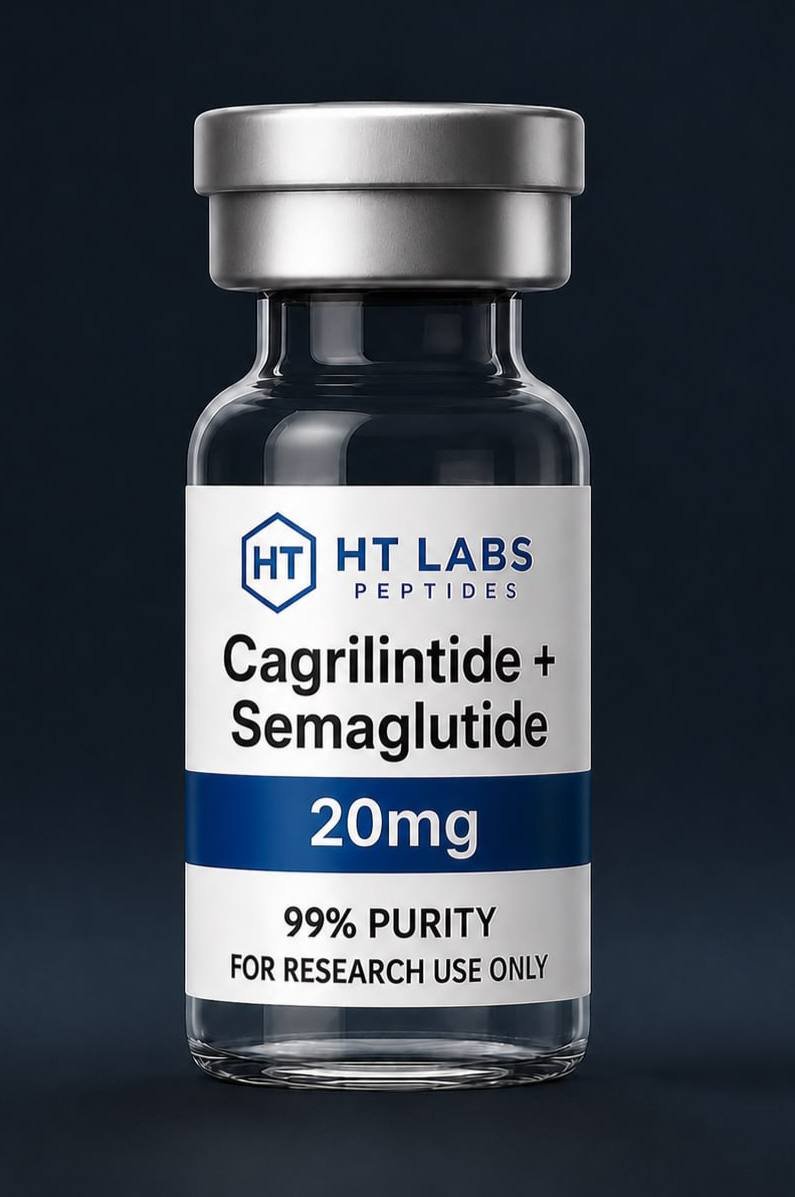
Description
Cagrilintide + Semaglutide: The Synergistic Dual-Pathway Peptide for Advanced Metabolic Research
Introduction: A New Frontier in Peptide Research
The landscape of metabolic research has witnessed remarkable advancements over the past decade, yet few developments have generated as much excitement as the emergence of multi-targeted peptide therapies. Among these innovations, the combination of Cagrilintide and Semaglutide stands out as a particularly promising area of investigation. This synergistic dual-compound approach represents a paradigm shift in how researchers approach obesity, type 2 diabetes, and related metabolic disorders. Therefore, understanding the distinct mechanisms, complementary actions, and research applications of this powerful peptide combination is essential for scientists and laboratory professionals seeking cutting-edge tools for their investigative work.
Cagrilintide, a novel amylin analog, and Semaglutide, a well-characterized GLP-1 receptor agonist, together form what the scientific community now refers to as CagriSema. Consequently, this combination has emerged as one of the most studied peptide pairs in contemporary metabolic research. The rationale behind combining these two compounds is compelling and well-supported by preclinical evidence. When administered together, they target complementary physiological pathways that regulate appetite, glucose homeostasis, and energy expenditure. Specifically, Semaglutide acts primarily through the GLP-1 receptor to enhance insulin secretion, slow gastric emptying, and promote satiety, while Cagrilintide activates the amylin receptor to further suppress food intake and modulate glucose metabolism through distinct neural pathways. This dual-action mechanism is not merely additive but appears to be synergistic, producing effects that may exceed the sum of their individual contributions.
This comprehensive product description aims to provide researchers with a thorough understanding of the Cagrilintide + Semaglutide combination. It will explore the structural characteristics of each peptide, their respective mechanisms of action, the scientific basis for their combined use, critical quality specifications, and the diverse research applications that make this combination so valuable. Furthermore, the discussion will extend to proper handling, reconstitution, and storage protocols to ensure optimal experimental outcomes.
Structural Characteristics and Mechanism of Action
Understanding Semaglutide: The GLP-1 Receptor Agonist
Semaglutide is a synthetic analog of the human glucagon-like peptide-1 (GLP-1), a naturally occurring incretin hormone that plays a fundamental role in glucose metabolism. The native GLP-1 is secreted by intestinal L-cells in response to nutrient intake and exerts its effects by binding to the GLP-1 receptor, which is widely expressed in pancreatic beta cells, the central nervous system, and various peripheral tissues. However, the native hormone is rapidly degraded by the enzyme dipeptidyl peptidase-4 (DPP-4), resulting in a half-life of merely 1-2 minutes. Semaglutide was engineered to overcome this limitation through strategic structural modifications.
Specifically, Semaglutide incorporates a substitution of alanine for glycine at position 8, which provides resistance to DPP-4-mediated degradation. Additionally, it features a C-18 fatty acid side chain attached to lysine at position 26 via a hydrophilic spacer. This acylation modification promotes strong binding to serum albumin, thereby extending the peptide’s half-life to approximately one week in humans. In laboratory settings, this extended stability translates into sustained receptor activation and prolonged biological activity, making Semaglutide an exceptionally valuable research tool.
The mechanism of Semaglutide action is well-characterized. Upon binding to the GLP-1 receptor, it activates a cascade of intracellular signaling events, primarily through the stimulation of adenylate cyclase and the subsequent elevation of cyclic AMP (cAMP) levels. This signaling pathway enhances glucose-dependent insulin secretion from pancreatic beta cells, suppresses glucagon release from alpha cells, slows gastric emptying, and promotes feelings of satiety through central nervous system actions. Furthermore, preclinical studies have demonstrated that Semaglutide can promote beta-cell proliferation and survival, suggesting potential disease-modifying effects beyond acute glycemic control.
Understanding Cagrilintide: The Amylin Analog
Cagrilintide represents a newer class of peptide therapeutics derived from human amylin, also known as islet amyloid polypeptide (IAPP). Amylin is a 37-amino-acid peptide that is co-secreted with insulin by pancreatic beta cells in response to nutrient stimuli. Under normal physiological conditions, amylin complements the actions of insulin by regulating nutrient flux, suppressing glucagon secretion, and modulating gastric emptying. Additionally, amylin acts within the area postrema of the brain to reduce food intake and promote satiety.
Native amylin has poor pharmaceutical properties, including a tendency to aggregate and form amyloid fibrils, which has limited its therapeutic utility. Consequently, Cagrilintide was developed as a highly stable, aggregation-resistant analog that retains full agonism at the amylin and calcitonin receptors. Through systematic peptide engineering, Cagrilintide incorporates specific amino acid substitutions that prevent fibril formation while preserving its biological activity. This enhanced stability makes Cagrilintide suitable for research applications requiring consistent and reproducible results.
The mechanism of Cagrilintide action is distinct from that of GLP-1 receptor agonists. It binds primarily to the amylin receptor, a complex of the calcitonin receptor and receptor activity-modifying proteins (RAMPs). This binding activates signaling pathways that suppress glucagon secretion, slow nutrient absorption by delaying gastric emptying, and induce satiety signals through brainstem pathways. Importantly, the amylin pathway provides a complementary mechanism to GLP-1 signaling, offering the potential for synergistic metabolic benefits when both pathways are engaged simultaneously.
The Rationale for Combination: Synergistic Effects of Cagrilintide + Semaglutide
Complementary Mechanisms
The scientific rationale for combining Cagrilintide and Semaglutide is elegantly simple yet profoundly effective. These two peptides target distinct but complementary pathways in metabolic regulation, and their combined action produces effects that neither compound can achieve alone. Consequently, the CagriSema combination has become a subject of intense research interest, with investigators exploring its potential for applications ranging from weight management to glycemic control and beyond.
Why does this combination work so well? The answer lies in the complementary nature of GLP-1 and amylin signaling. GLP-1 receptor activation promotes insulin secretion, inhibits glucagon, and delays gastric emptying, while also acting centrally to reduce appetite. Meanwhile, amylin receptor activation further suppresses food intake through distinct brainstem pathways and modulates glucose metabolism through mechanisms that partially overlap with and partially extend beyond those of GLP-1. Moreover, the amylin pathway appears to be particularly effective at suppressing food reward and reducing the hedonic drive to eat, which complements the GLP-1-mediated reduction in homeostatic appetite signals.
Preclinical Evidence
Substantial preclinical evidence supports the synergistic efficacy of Cagrilintide + Semaglutide. In diet-induced obesity (DIO) rodent models, the combination has consistently produced superior weight loss and glycemic improvements compared to either monotherapy. Specifically, studies have demonstrated that the CagriSema combination reduces body weight by 10-15% more than Semaglutide alone over comparable treatment periods. Furthermore, the combination has shown remarkable effects on food intake suppression, with treated animals consuming significantly fewer calories than those receiving either peptide alone.
Beyond weight loss, the combination has demonstrated favorable effects on metabolic parameters, including improved insulin sensitivity, reduced hepatic steatosis, and favorable lipid profiles. These findings suggest that the Cagrilintide + Semaglutide combination may offer comprehensive metabolic benefits that extend beyond simple caloric reduction. Therefore, this combination represents a particularly interesting research tool for investigators studying the integrated mechanisms of energy balance and glucose homeostasis.
Clinical Significance
Although this product is intended for research use only and is not approved for human therapeutic applications, the clinical interest in CagriSema is substantial. Ongoing clinical trials have evaluated the combination in patients with obesity and type 2 diabetes, with several trials reporting encouraging results. For instance, the REDEFINE clinical trial program has investigated CagriSema in various patient populations, and preliminary data have shown significant weight loss and glycemic improvements. Moreover, safety data have been generally favorable, with adverse events primarily limited to mild-to-moderate gastrointestinal effects that are consistent with the known profiles of GLP-1 receptor agonists.
Product Specifications and Quality Assurance
Purity and Identity
For research applications, the purity and identity of peptide reagents are absolutely critical. Consequently, Cagrilintide + Semaglutide products intended for laboratory use must meet stringent quality specifications to ensure experimental validity and reproducibility. A high-quality combination product will typically include peptides produced by solid-phase peptide synthesis (SPPS), followed by purification using high-performance liquid chromatography (HPLC). The final product is generally supplied as a sterile, lyophilized powder that is stable for extended periods when stored properly.
The purity of each peptide is typically assessed by analytical HPLC and mass spectrometry. For research-grade products, a purity of ≥98% is standard, with individual impurity profiles carefully monitored and reported. Identity is confirmed by mass spectrometric analysis, which verifies the correct molecular weight and amino acid sequence. Additionally, peptide content is determined to ensure accurate dosing and reconstitution. These rigorous quality control measures provide researchers with confidence in the consistency and reliability of their reagents.
Biological Activity
Biological activity is arguably the most important specification for any research peptide, as it directly determines the functional utility of the product. For Semaglutide, biological activity is typically assessed using cell-based assays that measure GLP-1 receptor activation, such as cAMP accumulation assays in cells expressing the human GLP-1 receptor. The specific activity is expressed relative to a reference standard, with acceptance criteria typically set at ≥80% of the reference activity. For Cagrilintide, biological activity is evaluated using similar cell-based assays measuring amylin receptor activation, with comparable potency specifications.
The combination product’s biological activity must be assessed both individually and in combination to ensure that the presence of one peptide does not interfere with the activity of the other. Furthermore, stability studies are conducted to confirm that the peptides remain biologically active under recommended storage and handling conditions. These comprehensive quality assessments provide researchers with the assurance that their experimental results will be reliable and reproducible.
Endotoxin and Bioburden
Cell culture applications are particularly sensitive to contamination, and therefore, endotoxin and bioburden specifications are critical for any peptide intended for use with living cells. High-quality research peptides are typically tested for endotoxin levels, with acceptance criteria commonly set at ≤1.0 EU/μg. Additionally, sterility testing is performed to confirm the absence of microbial contamination, which is essential for maintaining the integrity of cell culture experiments.
Research Applications
Obesity and Metabolic Research
The Cagrilintide + Semaglutide combination has emerged as an exceptionally valuable tool in obesity research. The dual-pathway approach allows investigators to explore the integrated mechanisms of appetite regulation, energy expenditure, and adiposity. Specifically, researchers use this combination to study the central and peripheral signaling pathways that mediate food intake, the regulation of body weight set-points, and the metabolic adaptations that occur during weight loss.
Furthermore, the combination provides a means to investigate the interactions between the GLP-1 and amylin systems, offering insights into how multiple nutrient-sensing pathways integrate to control energy balance. Therefore, this research tool is particularly relevant for investigators studying obesity pathogenesis and developing novel therapeutic strategies.
Diabetes Research
Type 2 diabetes is characterized by a progressive decline in beta-cell function, insulin resistance, and impaired glucose homeostasis. The Cagrilintide + Semaglutide combination addresses multiple aspects of this complex disorder. Consequently, researchers use this combination to investigate the mechanisms of glucose-dependent insulin secretion, the regulation of glucagon secretion, and the potential for beta-cell protection and preservation.
Additionally, the combination offers a means to study the metabolic consequences of enhanced incretin and amylin signaling, providing insights into the integrated control of glucose metabolism. The combined effects on insulin secretion, glucagon suppression, and gastric emptying make this combination a particularly valuable tool for diabetes researchers.
Cardiovascular Research
Metabolic disorders are closely linked to cardiovascular disease, and the Cagrilintide + Semaglutide combination has shown intriguing effects on cardiovascular risk factors beyond its metabolic actions. For example, preclinical studies have demonstrated favorable effects on blood pressure, lipid profiles, and markers of inflammation. Therefore, researchers studying the cardiovascular consequences of obesity and diabetes may find this combination useful for investigating the mechanisms linking metabolic and cardiovascular health.
Neurological Research
The central nervous system plays a fundamental role in the regulation of appetite and energy balance, and both GLP-1 and amylin receptors are expressed in key brain regions involved in food intake control. Consequently, the Cagrilintide + Semaglutide combination is a valuable tool for studying the neural circuits that regulate feeding behavior. Researchers use this combination to investigate the brainstem and hypothalamic pathways that integrate hormonal signals to control food intake and energy expenditure.
Handling, Reconstitution, and Storage
Proper Reconstitution
To ensure optimal stability and activity of the Cagrilintide + Semaglutide combination, careful attention to reconstitution procedures is essential. The peptide combination is supplied as a lyophilized powder, which should be stored desiccated at -20°C until use. Before reconstitution, the vial should be centrifuged briefly to collect all powder at the bottom, thereby preventing loss during opening.
The recommended reconstitution buffer is sterile, endotoxin-free water for injection or sterile 0.9% saline. It is generally recommended to reconstitute to a concentration of 0.1-1.0 mg/mL, depending on the intended experimental use. Buffer should be added slowly down the side of the vial to avoid foaming, and the vial should be gently swirled to dissolve the powder. Vortexing or vigorous agitation should be avoided, as this can lead to peptide denaturation and aggregation.
Storage Recommendations
Once reconstituted, the peptide solution should be stored refrigerated at 2-8°C for short-term use (up to one week). For longer storage, the solution can be aliquoted into sterile polypropylene tubes and stored frozen at -20°C or -80°C for up to three months. It is crucial to avoid repeated freeze-thaw cycles, as this will degrade the peptide and reduce its biological activity. To maintain stability, it is recommended to store reconstituted peptides in the presence of a carrier protein such as 0.1% bovine serum albumin (BSA) or human serum albumin (HSA). For optimal stability, aliquots should be stored in silanized or low-binding polypropylene tubes.
Conclusion: A Powerful Research Tool for the Metabolic Age
In conclusion, the Cagrilintide + Semaglutide combination represents a significant advancement in metabolic research tools. The synergistic activation of GLP-1 and amylin pathways provides a powerful approach to studying the integrated mechanisms that regulate energy balance, glucose homeostasis, and metabolic health. Consequently, this combination has become an invaluable resource for researchers investigating obesity, diabetes, and related metabolic disorders.
The complementary actions of these two peptides, their favorable stability profiles, and the robust scientific evidence supporting their combined efficacy make Cagrilintide + Semaglutide a reagent of choice for advanced research applications. When selecting a product for your laboratory, attention to quality specifications such as purity, biological activity, and endotoxin levels is paramount. Additionally, careful adherence to proper reconstitution and storage protocols will ensure the consistency and reproducibility of your experimental results.
As the field of metabolic research continues to evolve, the Cagrilintide + Semaglutide combination will undoubtedly remain at the forefront of scientific investigation, offering researchers a powerful tool to explore the complex biology of energy balance and metabolism. For research use only. Not for human therapeutic or diagnostic use.
Reviews
There are no reviews yet.