
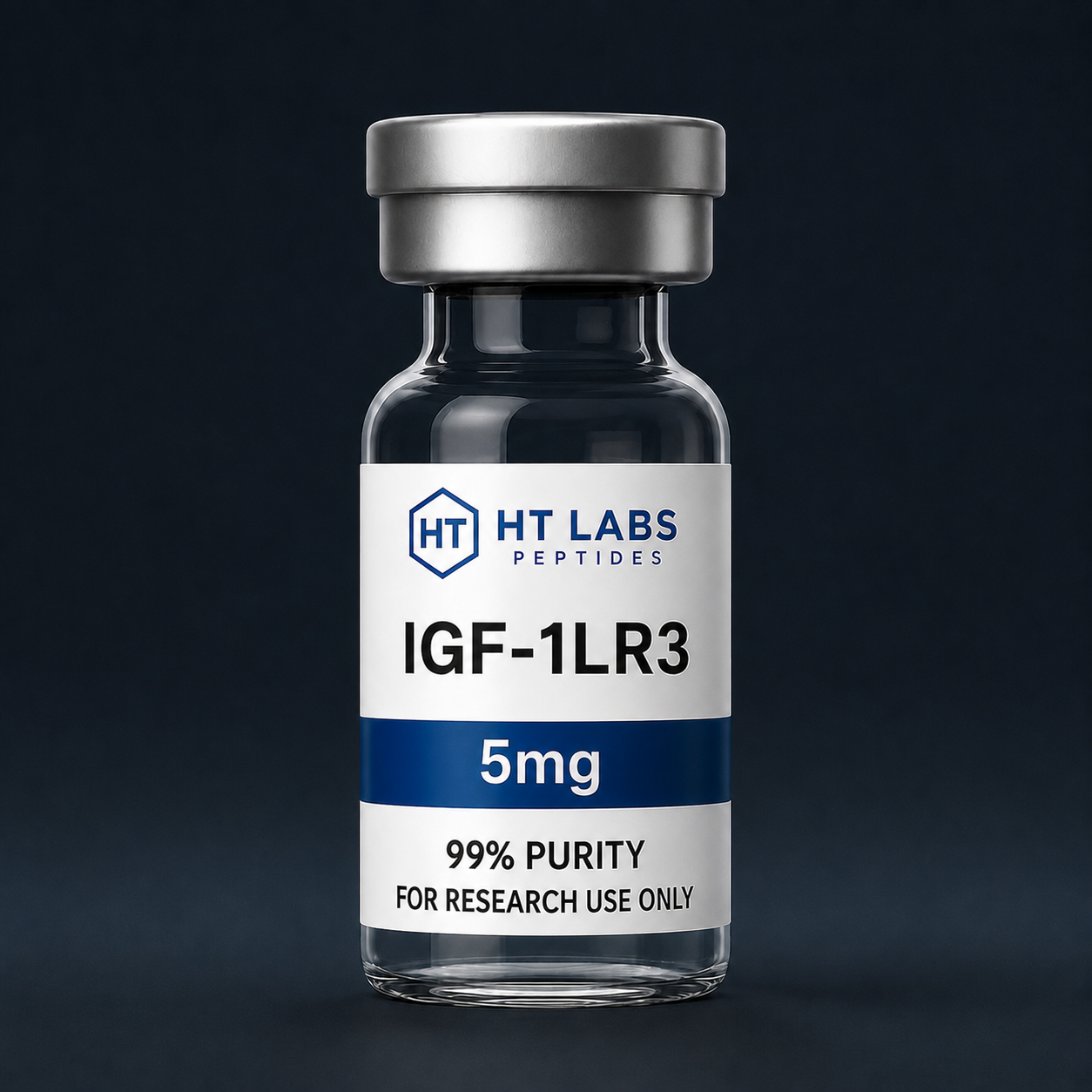
Description
IGF-1 LR3: The Next-Generation Recombinant Protein for Advanced Cell Culture and Research
In the world of cell biology and biotechnology, the pursuit of optimal cell growth, proliferation, and survival has always been a paramount objective. Consequently, scientists and researchers are in constant search of tools that can refine their experimental outcomes and enhance the productivity of their cell culture systems. One molecule that has, without a doubt, captured significant attention for its remarkable properties is the recombinant human Insulin-like Growth Factor-1 Long Arginine 3, commonly known as IGF-1 LR3.
IGF-1LR3 is not just another growth factor; it is a highly potent, synthetic analog of the naturally occurring Insulin-like Growth Factor-1 (IGF-1). IGF-1 itself is a critical polypeptide hormone that plays an essential role in childhood growth and continues to exert anabolic effects in adults . It mediates many of the growth-promoting actions of Growth Hormone (GH), stimulating the proliferation and survival of a wide variety of cell types, including muscle, bone, and cartilage tissue . However, the native IIGF-1LR3 molecule has limitations in a research setting, primarily due to its high affinity for a family of IGF-binding proteins (IGFBPs). These binding proteins are present in serum and many biological fluids, where they can sequester IGF-1 and modulate its biological activity, often reducing its immediate availability and efficacy .
This is precisely where the innovative engineering of IGF-1LR3 provides a significant advantage. This recombinant analog was specifically developed to overcome the limitations of native IGF-1LR3. Through a deliberate and strategic modification of the amino acid sequence, IGF-1 LR3 was designed to possess a vastly reduced affinity for most IGFBPs. Furthermore, this alteration confers an extended half-life and superior biological potency in vitro . Because of these enhanced characteristics, IGF-1 LR3 has become an indispensable reagent for a wide array of applications, ranging from basic scientific research to large-scale biopharmaceutical manufacturing.
Structural Engineering and Mechanism of Superior Potency
To truly appreciate the power of IGF-1 LR3, it is essential to understand its structural composition and how its unique design translates into superior biological activity. It is a recombinant protein comprising 83 amino acids, which is a modified version of the 70-amino-acid native human IGF-1 . The genius of its design lies in two key modifications.
First, it features a substitution at the third amino acid position, where a glutamic acid (E) is replaced by an arginine (R). This is the reason for the “R3” designation in its name . Second, its structure includes a 13-amino-acid extension peptide at the N-terminus. The full sequence of this extension is MFPAMPLLSLFVN . The complete amino acid sequence of the bioactive protein is MFPAMPLSSL FVNGPRTLCG AELVDALQFV CGDRGFYFNK PTGYGSSSRR APQTGIVDEC CFRSCDLRRL EMYCAPLKPA KSA . This entire molecule is the “LR3” part of the name for “Long R3” .
What are the functional consequences of these strategic changes? The primary effect is a dramatic reduction in the peptide’s affinity for the IGF-binding proteins. Therefore, when introduced into a cell culture system, IGF-1 LR3 is not readily bound and sequestered by these proteins; instead, it remains bioavailable to interact with its intended target . The result of this improved bioavailability is that IGF-1 LR3 demonstrates significantly higher potency than native IGF-1. This means that a much lower concentration of IGF-1 LR3 is required to achieve the same, or even superior, biological effect compared to using standard concentrations of native IGF-1 or even recombinant insulin . This characteristic is highly advantageous in research and manufacturing, as it allows for more precise control over signaling pathways and can reduce the cost and complexity of experiments.
The mechanism of action is well-conserved. Ultimately, IGF-1 LR3 exerts its effects by binding to the Type 1 IGF receptor (IGF1R) with an affinity comparable to that of the wild-type IGF-1 . This binding triggers a cascade of intracellular signaling, most notably the potent activation of the PI3K/AKT pathway and the ERK1/2 (MAPK) pathway . This signaling axis is fundamental to promoting cell survival by inhibiting apoptosis (programmed cell death), stimulating protein synthesis, and driving cell cycle progression for proliferation and differentiation .
Critical Quality Specifications for Reliable Research
For any researcher, the quality and purity of a reagent are non-negotiable. They form the bedrock of experimental validity and reproducibility. For IGF-1 LR3, several key specifications are the standard by which high-grade products are measured. This product is typically produced in E. coli expression systems, ensuring a highly consistent and scalable manufacturing process .
The specifications below are representative of a superior product, such as those offered by leading bioreagent companies. For instance, a typical high-purity IGF-1 LR3 will have a purity greater than 95% or even 98% as determined by SDS-PAGE gel and HPLC analyses, which ensures minimal contaminating proteins that could interfere with sensitive assays .
The molecular weight is consistently found to be around 9.1 kDa . Furthermore, stringent quality control ensures exceptionally low endotoxin levels, often measured at less than 0.1 EU/µg, making it suitable for cell culture applications where endotoxin contamination can negatively impact cell health and experimental outcomes .
The biological activity is, of course, the most critical functional specification. This is usually determined through cell-based assays, such as a proliferation assay using human MCF-7 breast cancer cells or a protein synthesis assay in rat L6 myoblasts. The concentration required to achieve 50% of its maximal effect (the ED50) is a key indicator of its potency. For IGF-1LR3, an ED50 of less than 2.0 ng/mL is a common benchmark, indicating a highly active and potent reagent . A product that meets these rigorous standards provides the confidence needed to produce consistent and reliable results.
Key Applications: From Stem Cell Maintenance to Biopharma Production
The unique properties of IGF-1 LR3 make it a versatile tool with a wide range of applications. Its ability to promote cell survival and proliferation while maintaining differentiation potential is highly valued across several disciplines. Here are the most prominent uses for this peptide.
Stem Cell Culture and Maintenance
For researchers working with human pluripotent stem cells (hPSCs), such as embryonic stem cells (ESCs) and mesenchymal stem cells (MSCs), the culture environment must be precisely controlled to maintain cells in a pluripotent state. IGF-1LR3 is a vital supplement in the media for maintaining and expanding these cells. It provides the necessary growth and survival signals required for stem cells to proliferate without spontaneously differentiating, which is essential for regenerative medicine and drug discovery applications .
Research in Cell Signaling and Mitogenesis
Because it is a potent agonist of the IGF-1 receptor, IGF-1 LR3 is an invaluable research tool for studying the intricacies of cell signaling pathways. It is used to specifically activate the PI3K/AKT and MAPK pathways, allowing researchers to investigate the roles of these pathways in a variety of cellular processes, including metabolism, apoptosis, gene expression, and cancer biology . Its ability to avoid binding to IGFBPs makes it a cleaner and more specific tool for such studies .
Large-Scale Biopharmaceutical Manufacturing
The commercial production of biopharmaceuticals such as monoclonal antibodies, vaccines, and other recombinant proteins often relies on mammalian cell culture systems to ensure proper protein folding and post-translational modifications. To achieve the highest possible yield of these valuable products, cell culture media must be optimized to maximize cell density and productivity. IGF-1 LR3 is a key component in these high-performance media formulations. It is specifically engineered to support large-scale manufacturing processes .
A significant advantage is that it can supplement media at a much lower concentration than recombinant insulin, often yielding equivalent or better productivity. This cost-effectiveness and higher efficiency can significantly improve the economics of biopharmaceutical production .
Protein Synthesis and Anabolism Studies
IGF-1 LR3 is also recognized for its potent anabolic effects, meaning it promotes the building up of complex molecules like proteins. Therefore, it serves as a powerful stimulant in assays designed to study protein synthesis and turnover, particularly in muscle cells. It is used to investigate the mechanisms behind muscle cell hypertrophy (growth) and differentiation . Its bioactivity in these models helps researchers understand the molecular control of muscle growth and can provide insights into conditions of muscle wasting.
Technical Handling, Reconstitution, and Storage
To ensure the bioactivity of your IGF-1LR3 is maintained from the time of purchase through to its use in an experiment, following the recommended handling protocols is of the utmost importance. The growth factor is typically supplied as a white, lyophilized (freeze-dried) powder . For long-term storage, the lyophilized product should be kept desiccated at -20°C. Under these conditions, it will remain stable for up to 12 months or more from the date of receipt .
When you are ready to reconstitute the product, it is vital to centrifuge the vial briefly before opening it to ensure all the lyophilized material is at the bottom of the vial. The recommended reconstitution buffer is sterile water, pH 7.2, or sterile 0.1% acetic acid . Pipette the reconstitution solution down the side of the vial to avoid excessive foaming and do not vortex, as this can denature the protein.
A common recommendation is to reconstitute to a concentration of at least 0.1 mg/mL . Once reconstituted, the product is more labile. To prevent degradation, it can be stored at 4°C for a short period of 2-7 days . For longer storage, prepare working aliquots in polypropylene tubes and store them frozen at -20°C or -80°C. It is critical to avoid repeated freeze-thaw cycles, as this can significantly reduce the protein’s activity . For additional stability during storage, many researchers add a carrier protein such as 0.1% bovine serum albumin (BSA) or human serum albumin (HSA) to the solution before aliquoting .
Conclusion: The Preferred Reagent for Demanding Applications
IGF-1LR3 represents a significant advancement over its native counterpart. Its enhanced stability, potent bioactivity, and reduced binding to inhibitory proteins make it the reagent of choice for researchers and manufacturers who require robust, reliable, and high-performing cell culture supplements. Whether you are supporting the growth of sensitive stem cells, investigating the details of cellular signaling pathways, or optimizing the production of a therapeutic protein, IGF-1LR3 provides a powerful and efficient solution. By selecting a product with a proven track record of high purity and bioactivity, as detailed by the product specifications, you can ensure your experiments and production processes are built on a solid foundation. For research use only. Not for use in diagnostic or therapeutic procedures.
Reviews
There are no reviews yet.