
Description
Oxytocin Acetate: A Comprehensive Guide to the Pleiotropic Research Peptide
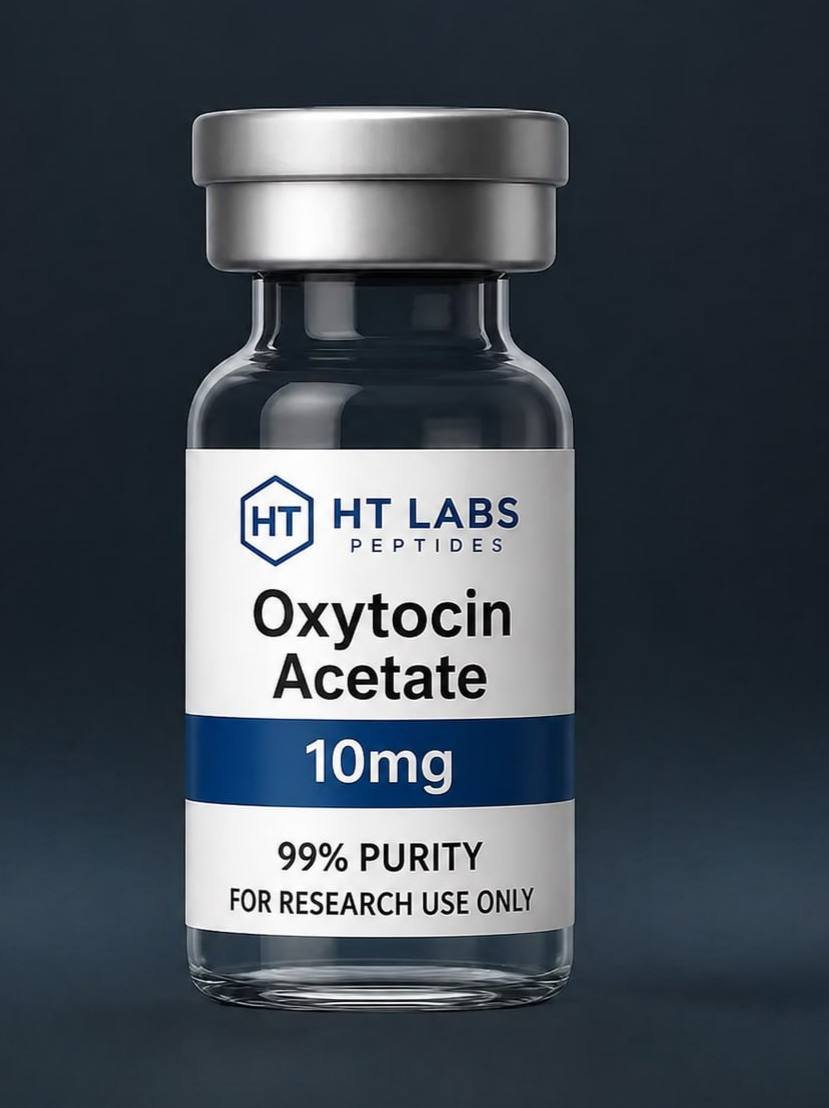
Oxytocin Acetate, scientifically designated as α-Hypophamine acetate, stands as a remarkable peptide hormone that has captured the attention of researchers worldwide . Known primarily for its classical roles in parturition and lactation, this pleiotropic hypothalamic peptide extends its influence far beyond these traditional boundaries. In recent years, the scientific community has uncovered its potential as a stress-coping molecule, an anti-inflammatory agent, and a modulator of complex social behaviors. For researchers investigating neuroendocrinology, behavioral science, or therapeutic peptide applications, understanding the full scope of Oxytocin Acetate is essential for designing rigorous and impactful studies .
This comprehensive guide explores the chemical properties, biological activities, research applications, and handling protocols for Oxytocin Acetate, providing the foundational knowledge necessary for effective laboratory use. Whether you are a seasoned researcher or new to peptide science, this resource will illuminate the multifaceted nature of this extraordinary compound.
Chemical Identity and Structural Properties
Molecular Characteristics
Oxytocin Acetate is a cyclic nonapeptide with a disulfide bridge between cysteine residues at positions 1 and 6, forming a structure that is critical for its biological activity . The compound features the molecular formula C₄₅H₇₀N₁₂O₁₄S₂ and possesses a molecular weight of approximately 1067.24 g/mol . For researchers requiring precise specifications, the CAS number for Oxytocin Acetate is 6233-83-6, which distinguishes it from the free base form (CAS 50-56-6) .
The acetate salt form enhances the peptide’s stability and solubility compared to the free base, making it particularly suitable for research applications. This salt form undergoes synthesis as a cyclic (1→6)-disulfide acetate, and its complete chemical name is L-Cysteinyl-L-tyrosyl-L-isoleucyl-L-glutamyl-L-asparaginyl-L-cysteinyl-L-prolyl-L-leucylglycinamide cyclic (1→6)-disulfide acetate . The peptide sequence is represented as CYIQNCPLG-NH₂ using single-letter amino acid notation .
Solubility Profile
Understanding the solubility characteristics of Oxytocin Acetate is paramount for experimental success. This peptide demonstrates excellent solubility in aqueous solutions, dissolving readily in water at concentrations up to 30 mg/mL . Similarly, it exhibits good solubility in DMSO at ≥50 mg/mL and is soluble in ethanol at 5 mg/mL . For research involving physiological conditions, Oxytocin Acetate dissolves effectively in PBS at pH 7.2, achieving concentrations of approximately 5 mg/mL .
This versatile solubility profile enables researchers to prepare stock solutions suitable for diverse experimental paradigms, from in vitro cell-based assays to in vivo administration protocols .
Purity and Quality Specifications
High-purity Oxytocin Acetate is essential for obtaining reproducible and reliable research results. Premium-grade preparations typically exceed 98% purity as determined by HPLC analysis . Some suppliers offer material with purity greater than 99%, ensuring minimal interference from impurities or degradation products . The lyophilized powder form, which is standard for research peptides, provides excellent stability when stored under appropriate conditions .
Biological Activity and Mechanism of Action
Receptor Interactions
Oxytocin Acetate functions primarily as a ligand for the Oxytocin Receptor (OXTR), a G-protein-coupled receptor that mediates the peptide’s diverse physiological effects . Upon binding to OXTR, the peptide initiates intracellular signaling cascades that include the activation of phospholipase C and stimulation of myometrial GTPase activity . This receptor-mediated mechanism underlies the hormone’s actions on uterine smooth muscle contraction, mammary gland myoepithelial cell stimulation, and numerous other physiological processes.
Neuroendocrine Functions
The classical endocrine functions of Oxytocin Acetate involve the stimulation of uterine contractions during labor and the facilitation of milk ejection during lactation . These effects are mediated through the peptide’s action on smooth muscle cells in the uterus and mammary glands. Additionally, the hormone plays a vital role in water excretion regulation and sodium homeostasis, functioning as a potent natriuretic hormone .
Stress-Coping and Neuroprotective Properties
Contemporary research has revealed that Oxytocin Acetate functions as a stress-coping molecule with remarkable anti-inflammatory, antioxidant, and protective effects . In the face of adversity or trauma, this peptide appears to modulate physiological stress responses, potentially offering neuroprotection and promoting resilience . These properties have sparked considerable interest in exploring Oxytocin Acetate as a therapeutic candidate for psychiatric conditions, including depression, anxiety disorders, autism spectrum disorders, and schizophrenia .
Social Behavior and Cognition
Perhaps one of the most intriguing aspects of Oxytocin Acetate research involves its role in modulating social behavior and cognition. The peptide has been implicated in prosocial behaviors, including trust formation, emotional recognition, and social bonding . Research suggests that Oxytocin Acetate may enhance social memory and facilitate the processing of social information, making it a valuable tool for investigating the neurobiological basis of social cognition . Furthermore, studies have explored its potential as a marker for autism severity and its involvement in obsessive-compulsive behaviors .
Research Applications and Experimental Considerations
In Vitro Studies
Oxytocin Acetate is widely employed in cell-based assays to investigate receptor signaling pathways, cellular responses, and the molecular mechanisms underlying its diverse biological effects. It has been used in cell proliferation assays and receptor autoradiography studies to assess nonspecific tissue binding and receptor distribution . Researchers studying neuroendocrine function frequently utilize Oxytocin Acetate to examine its effects on cellular signaling cascades, including the activation of GTPase and phospholipase C .
For in vitro applications, researchers must prepare fresh stock solutions and consider the peptide’s stability under experimental conditions. The solubility of Oxytocin Acetate in various media should be verified, and appropriate controls should be included to account for the acetate counterion’s potential effects .
In Vivo Studies
In animal models, Oxytocin Acetate is administered to investigate its effects on behavior, physiology, and neurobiology. Studies examining the peptide’s anxiolytic properties, its influence on social interactions, and its potential therapeutic applications for psychiatric disorders rely on carefully controlled in vivo experimental designs . For instance, researchers have explored the effect of oxytocin in the prelimbic (PL) region of the medial prefrontal cortex (mPFC) on anxiety behaviors, demonstrating the peptide’s site-specific actions in the brain .
The dosage, route of administration, and timing of treatment must be carefully optimized based on the specific research question and animal model employed. Researchers should consult published literature to identify appropriate experimental protocols for their particular application .
Peptide Delivery Systems
Recent advancements in peptide delivery technology have opened new avenues for Oxytocin Acetate research. Scientists have explored encapsulation strategies to protect the peptide from degradation and enhance its bioavailability. Complex coacervated matrix microparticles formed by spray drying represent one such approach, with studies examining the release characteristics of Oxytocin Acetate from these delivery systems .
Research has shown that while encapsulation can be effective for some peptides, the physicochemical properties of Oxytocin Acetate including its size, net charge, and hydrophobicity influence its release profile from microparticles. Such studies are crucial for developing practical formulations and understanding the peptide’s behavior in different environments .
Handling, Storage, and Stability
Proper Storage Conditions
Maintaining the stability of Oxytocin Acetate requires adherence to proper storage protocols. The lyophilized powder should be stored at -20°C, where it remains stable for up to three years . In some cases, storage at -80°C may be appropriate for extended periods, with some suppliers reporting stability of up to two years under these conditions . Once dissolved in solution, the peptide should be stored at -20°C or -80°C and used within one to six months, depending on the solvent and storage conditions .
Handling Procedures
When handling Oxytocin Acetate in the laboratory, researchers should follow standard safety protocols for working with peptides and research chemicals. This includes wearing appropriate personal protective equipment, such as lab coats, gloves, and safety eyewear . Upon receiving the product, the vial should be centrifuged briefly (8,000-12,000 g for 10-30 seconds) to ensure that the lyophilized powder has collected at the bottom of the container before opening .
For reconstitution, the peptide should be dissolved in the appropriate solvent, typically sterile water or PBS. Vortexing should be avoided to prevent potential degradation or aggregation; gentle swirling or pipetting is recommended instead . After reconstitution, the solution should be aliquoted into single-use portions to prevent repeated freeze-thaw cycles, which can lead to loss of activity .
Stability Considerations
Several factors influence the stability of Oxytocin Acetate, including temperature, pH, solvent composition, and the presence of oxygen or moisture. The peptide’s disulfide bond is particularly susceptible to reduction, and oxidative degradation can occur over time. For this reason, storage under inert atmosphere or in the presence of antioxidants may be necessary for long-term preservation .
Product Specifications and Quality Control
Analytical Testing
High-quality Oxytocin Acetate products undergo rigorous analytical testing to verify identity, purity, and potency. High-performance liquid chromatography (HPLC) is the standard method for assessing purity, with specifications typically requiring >98% or >99% purity . Mass spectrometry confirms the correct molecular weight, while other analytical techniques, including amino acid analysis and peptide mapping, may be employed to ensure batch-to-batch consistency .
Regulatory Compliance
Oxytocin Acetate intended for research use is subject to regulatory oversight in many jurisdictions. Products are typically designated for research purposes only, with explicit labeling indicating they are not for human or veterinary therapeutic use, nor for diagnostic applications . For analytical method development and quality control applications, Oxytocin Acetate can serve as a reference standard, with traceability to pharmacopeial standards such as USP or EP where applicable .
Safety Information
Laboratory Safety
Oxytocin Acetate should be handled in a well-ventilated laboratory environment, and contact with skin, eyes, and mucous membranes should be avoided. The appropriate personal protective equipment should always be worn during handling, and any spills should be cleaned promptly using proper procedures . While the peptide itself is not classified as a hazardous substance, the acetate salt form may have specific handling requirements that should be consulted in the Safety Data Sheet (SDS) provided by the supplier .
Regulatory Considerations
Researchers must be aware of the regulatory status of Oxytocin Acetate in their jurisdiction. In most countries, the peptide is classified as a research chemical and is not approved for human use. Purchasing, importing, and using this compound typically require institutional approval and compliance with applicable laws and regulations .
Summary and Research Outlook
Oxytocin Acetate represents a versatile and powerful tool for investigating neuroendocrine function, social behavior, and therapeutic peptide applications. From its classical roles in parturition and lactation to its emerging significance as a stress-coping molecule with anti-inflammatory properties, this peptide continues to yield fascinating insights across multiple disciplines .
As research progresses, scientists are uncovering new dimensions of Oxytocin Acetate’s biological activity. Its potential applications extend to psychiatric disease research, including investigations of depression, anxiety disorders, autism, and schizophrenia . The development of novel delivery systems and formulation strategies promises to enhance the utility of this peptide in research settings, while advances in receptor biology continue to elucidate its mechanisms of action .
By understanding the chemical properties, biological activities, and proper handling protocols for Oxytocin Acetate, researchers can design robust experiments that contribute meaningfully to our understanding of this remarkable peptide. The growing body of knowledge surrounding Oxytocin Acetate underscores its importance as a research tool and its potential for advancing therapeutic development in the years to come.
Reviews
There are no reviews yet.