
Description
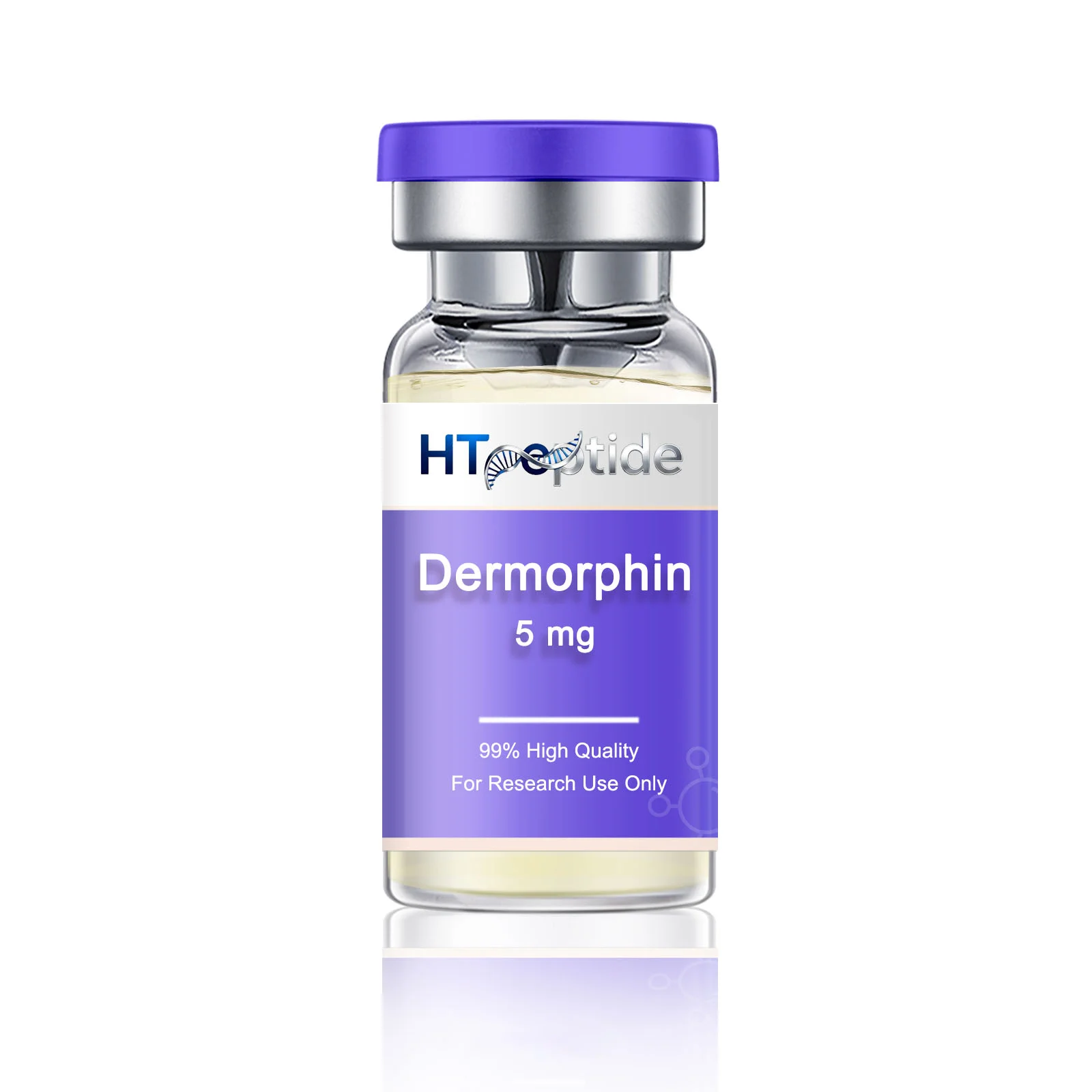
Dermorphin is a potent opioid peptide isolated from the skin of South American frogs that acts as a highly selective and potent agonist for the μ-opioid receptor. It is significantly more potent than morphine and shows potential for pain management, though it also has effects on the endocrine system.
Analgesic properties
- Potency: Dermorphin is estimated to be 30–40 times more potent than morphine and thousands of times more potent in animal models when administered intrathecally.
- Mechanism: It binds strongly and selectively to the μ-opioid receptor, which is the same receptor targeted by morphine.
- Potential applications: Its potency and selectivity suggest potential for treating severe pain, such as postoperative pain or pain in palliative care.
Other effects
- Endocrine effects: In humans, dermorphin administration has been shown to stimulate the release of hormones like prolactin, growth hormone, and thyrotropin, while decreasing cortisol levels.
- Gastrointestinal effects: It can inhibit gastric emptying, slow colonic motility, and inhibit gastric acid secretion in animal models.
- Tolerance: Similar to other opioids, dermorphin can induce tolerance with prolonged or repeated administration.
Structure and classification
- Peptide: It is a hepta-peptide with the amino acid sequence: H-Tyr-D-Ala-Phe-Gly-Tyr-Pro-Ser-NH2.
- Uniqueness: The presence of a D-amino acid (D-Ala) at the second position makes it resistant to breakdown by many enzymes, contributing to its potency and longevity.
Reviews
There are no reviews yet.